
Watch the show in 30 seconds0:30
Impact Windows & Doors
Compared Side by Sideat theHOME DESIGN AND REMODELING SHOW
Every Impact Window Bid Reads the Same on Paper
Three quotes for the same house can be $10,000 or more apart. They all say the same three things: laminated glass, hurricane rated, permits included. The difference never shows up in a PDF.
You have to see it and touch it. You can do that at the Fort Lauderdale Home Show, January 29–31, 2027 at the Broward County Convention Center in Fort Lauderdale.
Window and door companies. Full-size windows and doors you can open and close yourself. It all takes one afternoon.
Three Questions to Ask at Every Booth
The cheapest bid and the priciest bid can be the same window. What changes is how it gets put in. Ask these three at every booth and the real gap shows up fast.
A window is approved for one exact build, not a whole catalog. Two questions at the booth tell you if yours is covered.
What to ask
- Get the state product approval number. Some counties issue their own instead, called a Notice of Acceptance. Either one covers one size, one frame and one glass build, and nothing else. Ask for the number that fits your openings.
- Get the design pressure rating. That is the wind load the window is built to hold. A window rated too low is the costliest thing to find out about after it is in the wall.
Most bids quote much the same laminated glass. The price gap sits in the frame and in the install.
What to ask
- Ask what the frame is made of. Aluminum, vinyl or composite. Ask how deep it is, too.
- Ask if it has a thermal break. That is an insulating strip inside the frame that slows heat through the metal.
- Ask how the sash meets the sill. The sash is the part that opens.
- Then ask about the install. A retrofit sets the new window inside the old frame, or buck. A full tear-out goes back to the outside finish.
- The glass is the same either way. The labor, the warranty and the sightline are not.
Ask what else is in the price. This is where a low bid quietly turns into a high one.
What to ask
- Permit fees, engineering and inspections. Get each one on its own line.
- Stucco patching, drywall returns, paint and caulk. Someone has to close the wall back up.
- Hauling the old units away. Add re-doing your alarm sensors to that list.
- A price next to every one of those items. Make each vendor write them out rather than wave them off.
- How many crews they run, and who runs yours. Ask who is in charge on the day your walls are open to the weather.
Impact Glass, Sliders and Doors, Booth by Booth
Real photos from recent shows.
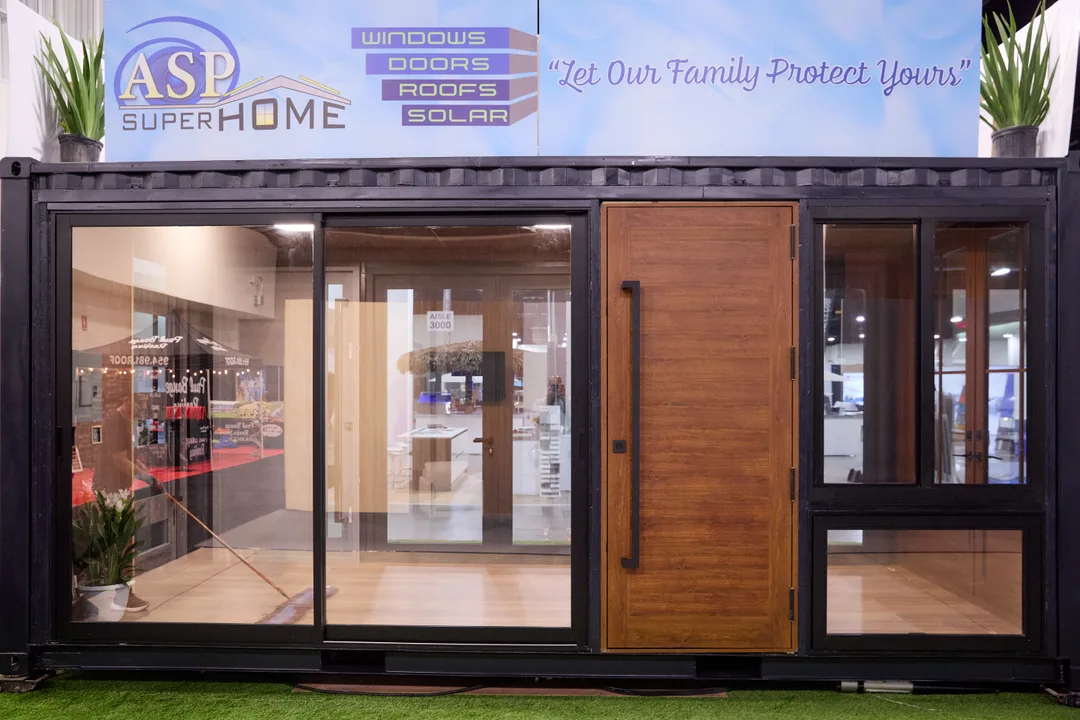
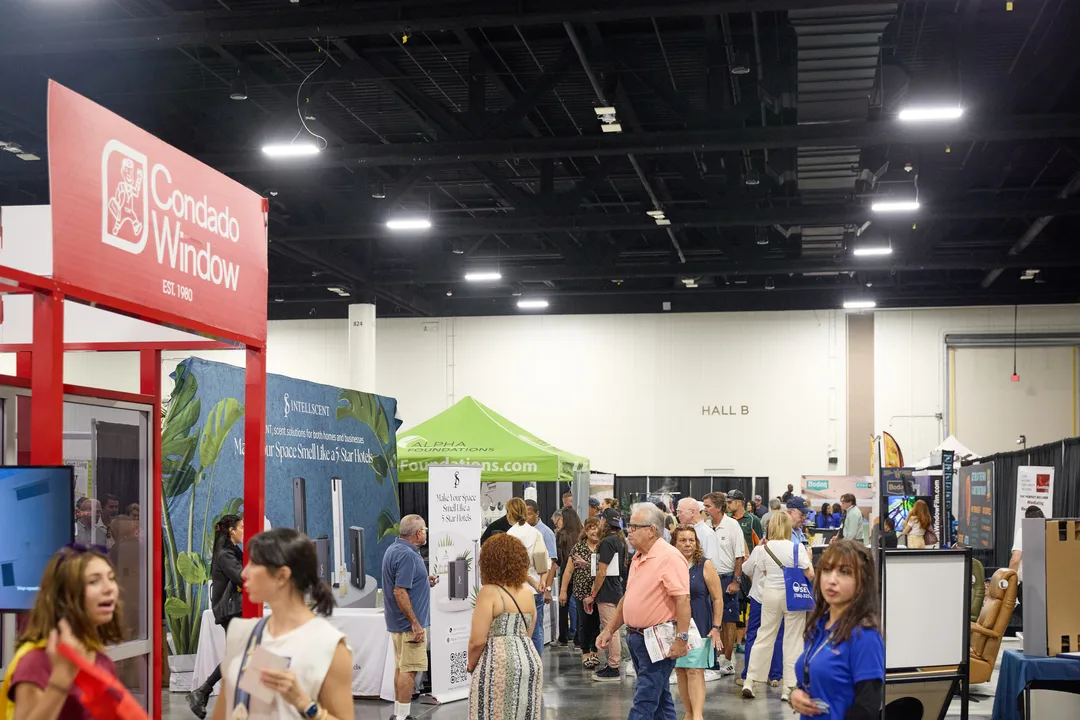

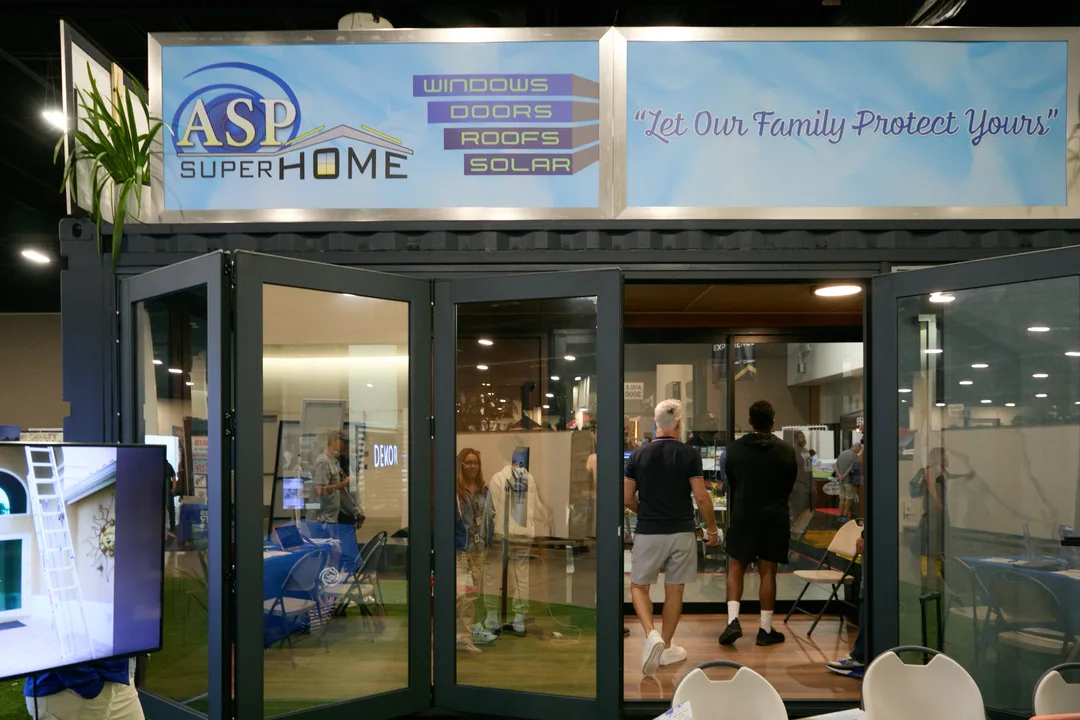
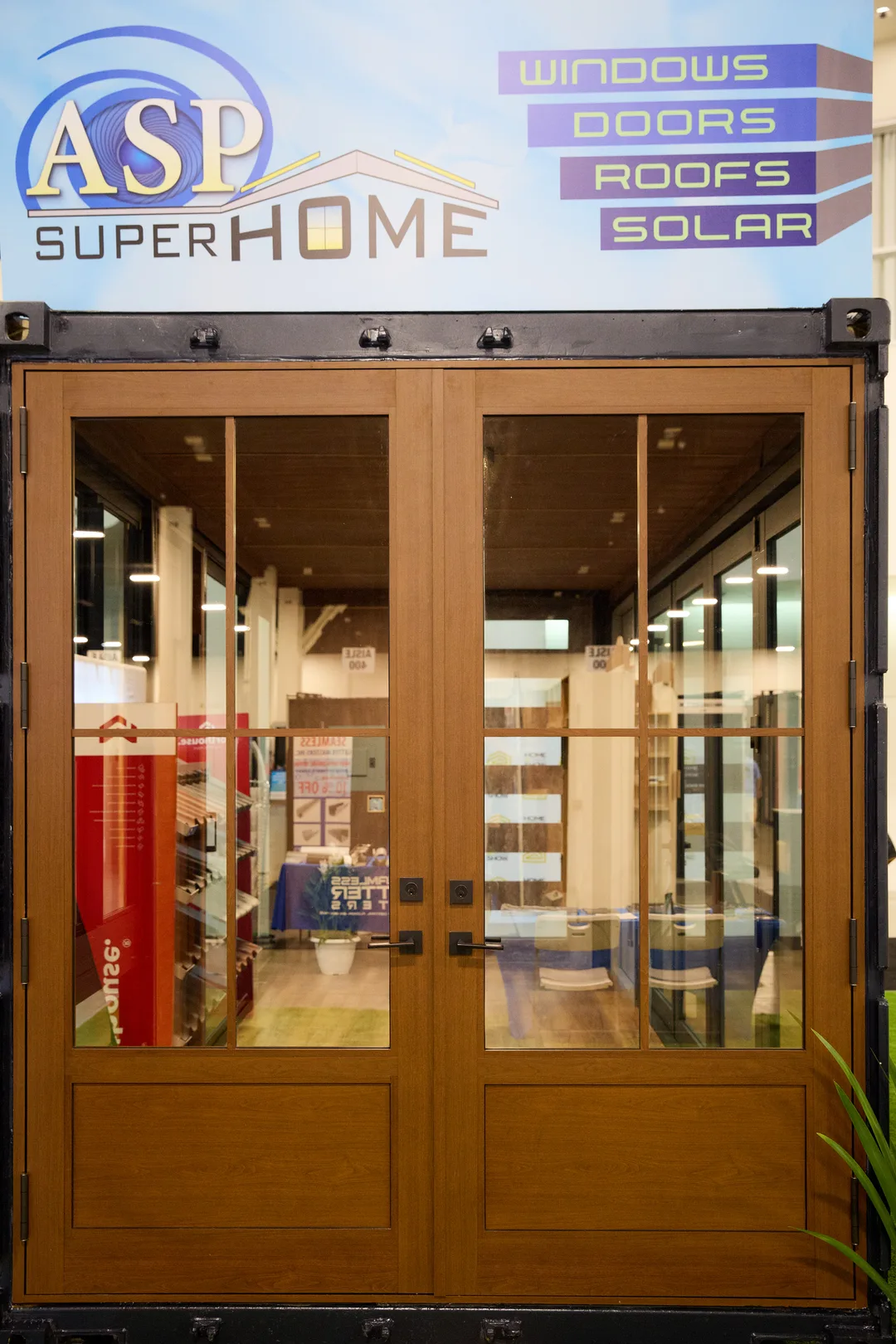
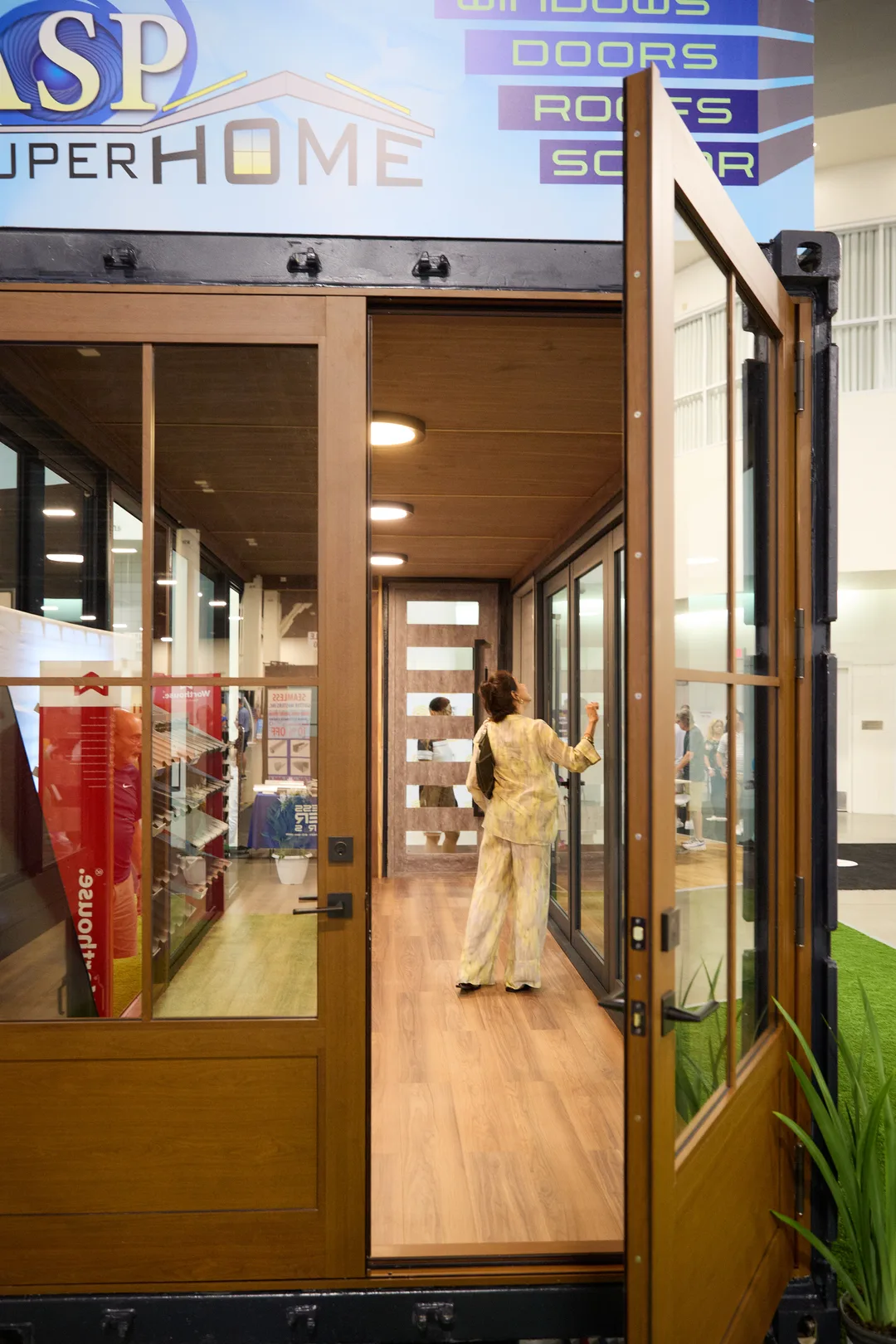
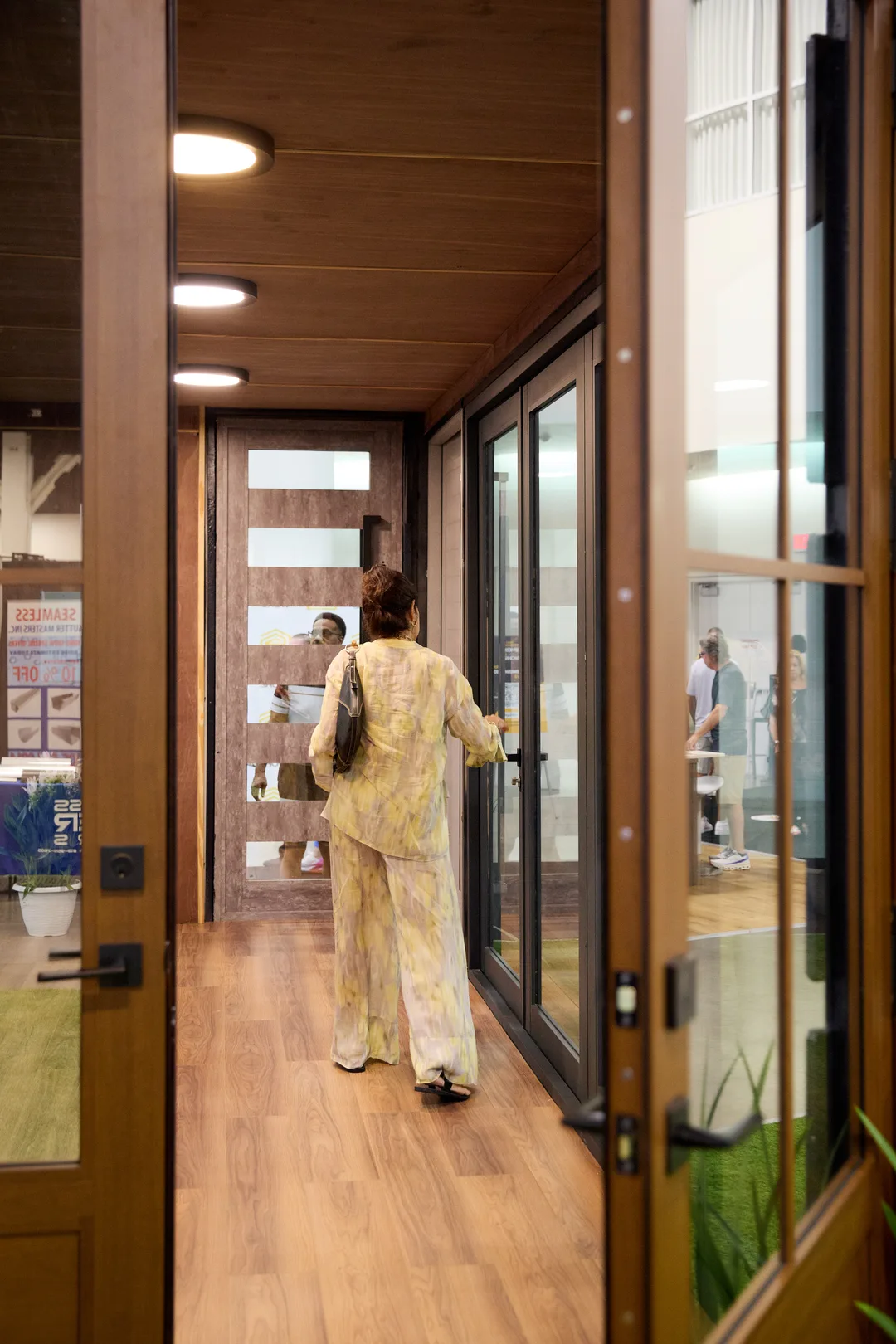
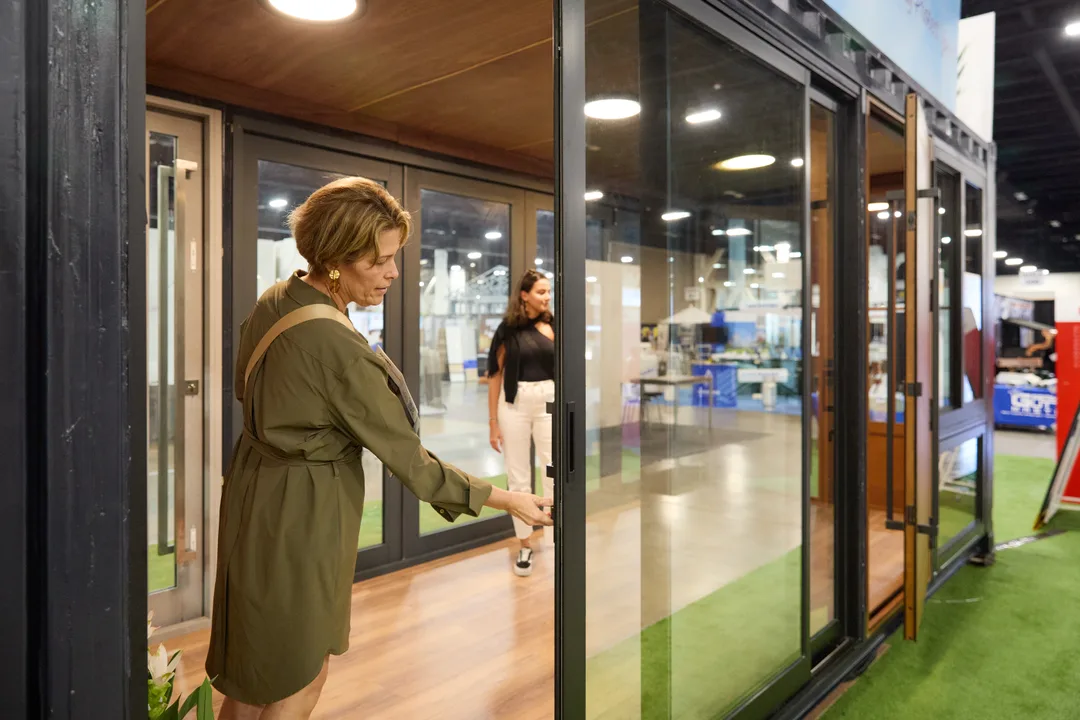
Roll It Yourself. Then Go Roll the Other One.
An impact slider is the one item you can grade with your own hands. So roll the panel yourself. A good one glides with one finger and stops without a bang. A gritty one is a bad sign.
Then look at the interlock, where two panels overlap when the door is shut. A shallow one, on a plastic roller, only gets worse in salt air.
Rank each booth that way. Give pivot doors and French doors the same test. Check these five things at each booth:
- Check the handle height. The handle should land where your hand goes, not where the display puts it.
- Look at the threshold. That is the track you step over. Ask to see how it meets a tile floor.
- Ask about frame depth. It has to be deep enough to hide the gap around the window. Too shallow and you stare at a line of caulk for years.
- Look at how the glass is set. Sloppy work where the glass meets the sash turns into rattles and leaks.
- Ask to see the real finish. Ask for bronze or black. The sample on display is almost always white. Finish is where a budget quietly goes.
What a Website Visit Cannot Do
Three in-home estimates take three weeks. One trip to the show floor does the same work. The follow-up call is shorter, too. By then you know which frame you want and what it should cost.
- Three companies in an hour. Ask the same six questions at three booths. The answers will not match, and the gaps tell you a lot.
- Your hands beat a photo. Feel the weight. Listen to the lock. None of that comes through on a website.
- Look at what you will live with. Check the frame width you will stare at from inside the room. Ask to see a cut edge of the glass.
- Ask about the crew, not the closer. Do their own people install, or do they hire a subcontractor? How long do permits take in your city? What happens when an inspection fails?
- Listen for unscripted answers. Note who is glad you asked. Note who changes the subject to a monthly payment.
Impact Windows & Doors at the Home Show
Other Projects Worth Comparing in Person
Bring Your Openings. Leave With Real Numbers.
Come with your openings on paper. You leave with real numbers instead of brochures.
- Count and photograph each opening. Shoot it inside and out. Note a rough width and height.
- Bring any bid you already have. It is the fastest way to get a straight side-by-side.
- Ask three companies the same questions. Cover the glass, the frame, the install and the finish work.
January 29–31, 2027 at the Broward County Convention Center.